

Jaundice in newborn babies is very common and causes yellowing of the skin and eyes during the first days of life due to a build-up of bilirubin in the blood. While most newborn jaundice is mild and temporary, some babies develop bilirubin levels that require monitoring or treatment.
Seeing your newborn’s skin or eyes turn yellow can understandably make parents anxious. This guide explains what newborn jaundice is, what causes it, how bilirubin levels are measured, when jaundice can become serious, the treatments available, and answers common frequently asked questions from parents about newborn jaundice.
Key Points About Newborn Jaundice
• Jaundice causes yellowing of the skin and eyes
• It is very common in newborn babies
• Most cases are mild and improve naturally
• Some babies require bilirubin monitoring or phototherapy
• Severe jaundice requires urgent treatment to prevent complications
What Is Newborn Jaundice?
Jaundice is the yellow colouring of a baby’s skin and the whites of their eyes caused by a build-up of bilirubin in the blood.
Bilirubin is a yellow waste product produced when red blood cells break down. Usually, bilirubin is processed in the liver before leaving the body through poo and urine.
In newborns, several things can stop this process happening properly, which can lead to a build-up of bilirubin in the blood and cause jaundice.
Symptoms of Jaundice in Newborns
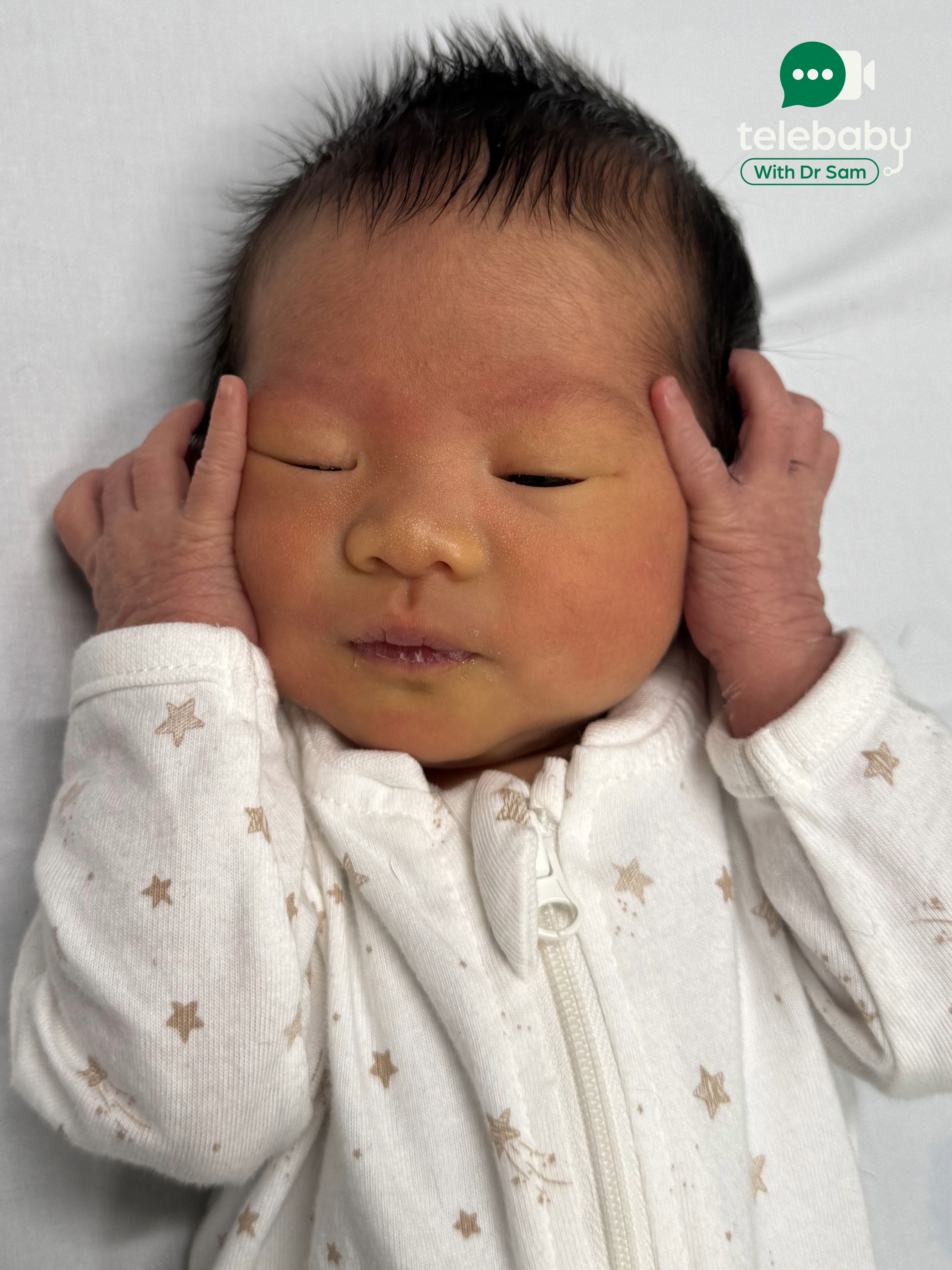
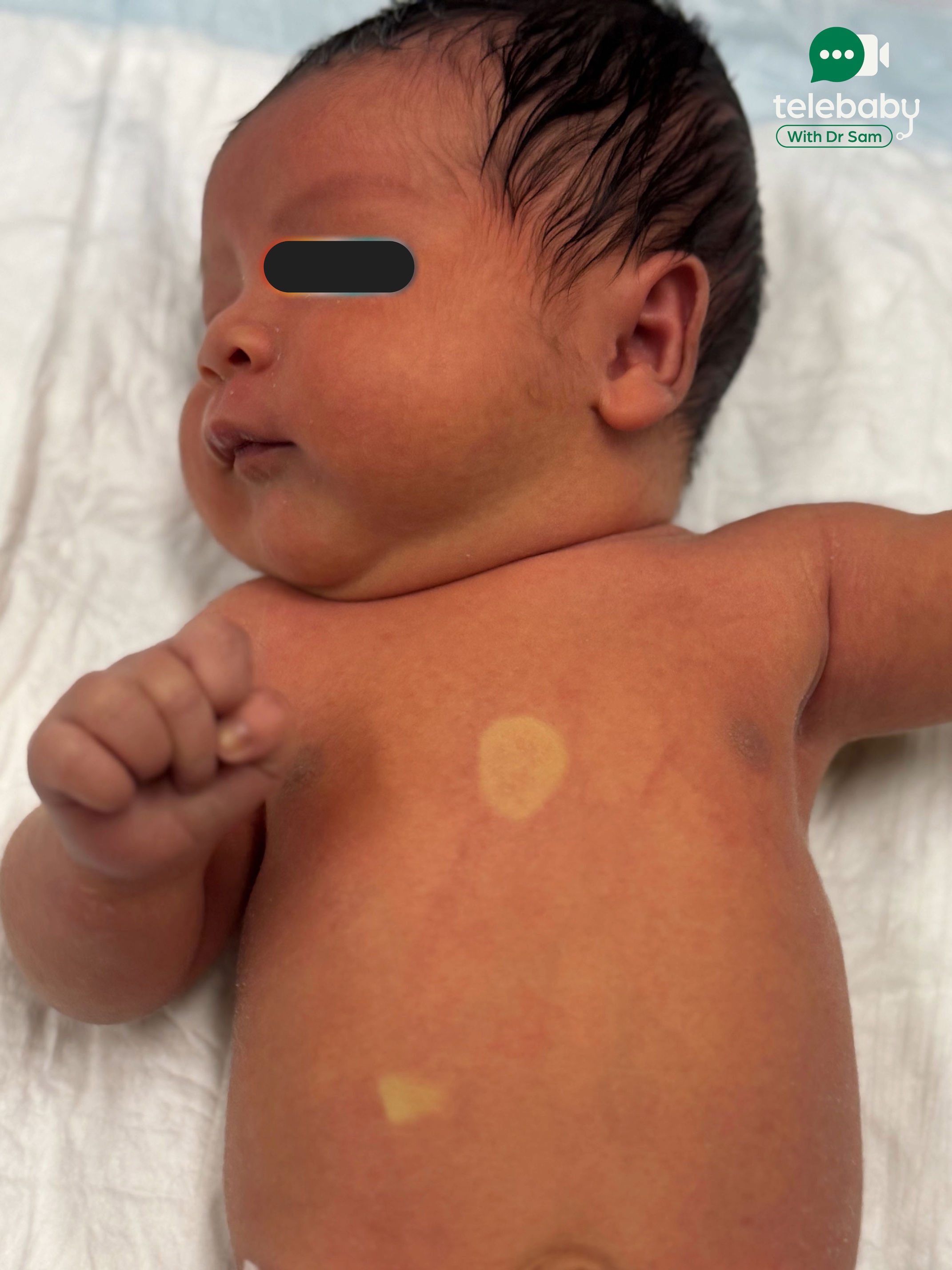
Newborn jaundice causes a yellow colouring of your baby’s skin and the whites of their eyes.
Jaundice typically starts on the face and head. As bilirubin levels increase, the yellow colouring spreads to the chest and tummy, then to the arms and legs.
In babies with darker skin tones, jaundice may sometimes be easier to notice in the eyes, gums, palms or soles.
Some babies with jaundice may also:
• Be more sleepy or difficult to wake
• Feed poorly
• Have fewer wet nappies
• Have poor weight gain
Babies with biliary atresia may develop pale, white or clay-coloured stools and dark urine. These are important signs that require urgent medical review. See the biliary atresia section below for more information.
How Common Is Jaundice in Babies?
Newborn jaundice is extremely common.
• Around 60% of full-term babies develop jaundice
• Up to 80% of premature babies develop jaundice
• Jaundice often appears around days 2-3 of life
• Bilirubin levels usually peak around days 3-5
• In most healthy babies, jaundice improves naturally within 1-2 weeks
What Causes Jaundice in Babies?
There are several causes of newborn jaundice.
Physiological Jaundice
This is the most common type of newborn jaundice and is considered part of the normal newborn transition.
Newborn babies are born with a higher number of red blood cells because they are needed in the lower-oxygen environment of the womb. After birth, these extra red blood cells are broken down as babies adapt to the oxygen-rich environment outside the womb, producing bilirubin.
At the same time, a newborn baby’s liver is still immature and less efficient at removing bilirubin from the body during the first few days of life. This combination leads to a temporary build-up of bilirubin, causing what is known as physiological jaundice, the most common type of newborn jaundice.
Physiological jaundice usually:
• Appears after the first 24 hours of life
• Peaks around days 3-5
• Gradually improves over 1-2 weeks in full-term babies
Most babies with physiological jaundice are otherwise well and feed normally.
Breastfeeding or Feeding-Related Jaundice
Some babies develop jaundice because they are not getting enough milk during the early days while feeding is still establishing.
Poor intake can lead to:
• Dehydration
• Fewer bowel motions
• Reduced bilirubin removal from the body
Frequent feeding helps babies clear bilirubin through their stool. Delayed passage of meconium (a baby’s first stool) can also contribute to jaundice because bilirubin leaves the body through bowel motions.
Support from a child and family health nurse or lactation consultant can also help optimise breastfeeding and ensure babies are feeding effectively.
Breast Milk Jaundice
Some healthy breastfed babies develop jaundice after the first week of life that can persist for several weeks. This is called breast milk jaundice.
Breast milk jaundice is thought to occur because certain substances in breast milk can increase the reabsorption of bilirubin from the intestines into the bloodstream. This can lead to mildly elevated bilirubin levels in some otherwise healthy babies.
Breast milk jaundice often becomes noticeable after the first week of life and can last up to 8 - 12 weeks before gradually resolving.
Babies with breast milk jaundice are usually:
• Feeding well
• Gaining weight appropriately
• Alert and otherwise healthy
Breast milk jaundice is usually considered a diagnosis of exclusion, meaning other important causes of prolonged jaundice should first be ruled out by a healthcare professional.
Breast milk jaundice is usually harmless, and continued breastfeeding is recommended.
Blood Group Incompatibility
Certain blood group differences between mother and baby can cause increased breakdown of red blood cells, leading to higher bilirubin levels.
This includes:
• ABO incompatibility
• Rhesus (Rh) incompatibility
In these situations, antibodies from the mother can cross the placenta and attack the baby’s red blood cells, causing them to break down more quickly and produce excess bilirubin.
This type of jaundice often appears within the first 24 hours of life and may require urgent treatment.
Rh incompatibility can become more severe in future pregnancies if preventative treatment is not given. Mothers who are Rh-negative are routinely offered anti-D injections during and after pregnancy to help prevent complications in future pregnancies.
Haematological Causes of Jaundice
Some babies develop jaundice because their red blood cells break down more quickly than normal.
This can occur in conditions such as:
• G6PD deficiency
• Hereditary spherocytosis
• Other inherited red blood cell disorders
In these conditions, red blood cells are more fragile or abnormally shaped, causing increased breakdown of red blood cells and higher bilirubin levels.
These babies may develop:
• Jaundice within the first 24 hours of life
• Rapidly rising bilirubin levels
• Anaemia
Additional blood tests may be needed to identify the underlying cause.
Jaundice from Delayed Cord Clamping
Doctors may recommend delaying the clamping and cutting of a baby’s umbilical cord after birth. Delayed cord clamping allows extra blood and red blood cells from the placenta to enter the baby’s circulation and has several benefits, including improving iron stores.
However, because the baby receives a larger number of red blood cells, there can sometimes be more bilirubin produced when these cells are later broken down. This may increase the chance of mild jaundice in some babies.
This type of jaundice usually only requires monitoring and often improves on its own within 1-2 weeks.
Jaundice from Birth Trauma or Birth Interventions
Some babies develop jaundice because of swelling or bruising after birth. This may occur following birth interventions such as forceps or vacuum-assisted delivery.
When bruising occurs, extra red blood cells collect under the skin. As these red blood cells break down, additional bilirubin is produced, which can contribute to jaundice.
This type of jaundice usually only requires monitoring and often improves on its own within 1-2 weeks.
Prematurity
Premature babies are more likely to develop jaundice because their liver is less mature and less efficient at processing bilirubin.
Infection, Liver and Metabolic Causes
Rarely, jaundice can be caused by:
• Infection
• Liver disease
• Genetic or metabolic conditions
• Hypothyroidism
These causes are more likely to be considered if jaundice is severe, prolonged, associated with poor feeding or poor weight gain, or accompanied by other concerning symptoms.
Some metabolic conditions and hypothyroidism are routinely screened for at birth through the newborn bloodspot screening test (heel prick test).
Biliary Atresia
Biliary atresia is a rare but serious condition affecting the bile ducts in babies.
Normally, bile flows from the liver through small tubes called bile ducts and into the intestines, where it helps digest fats and remove bilirubin from the body. In biliary atresia, these bile ducts become blocked or damaged, preventing bile from leaving the liver properly.
As bile builds up in the liver, bilirubin levels rise and jaundice develops.
Unlike typical newborn jaundice, biliary atresia usually causes jaundice that:
• Persists beyond 2 weeks of age
• May gradually worsen over time
• Is associated with pale, white or clay-coloured stools and dark urine
• May be associated with poor weight gain or an enlarged liver
Early diagnosis is extremely important because treatment is most successful when performed within the first 6-8 weeks of life.
Babies suspected of having biliary atresia require urgent investigation, including:
• Blood tests
• An abdominal ultrasound
• Urgent referral to a paediatric gastroenterologist and paediatric surgeon
Treatment requires urgent surgery known as the Kasai procedure, which aims to restore bile flow from the liver. Some children may later require a liver transplant.
How Is Jaundice Measured?
Your child and family health nurse, midwife, GP or paediatrician should check and monitor your newborn for jaundice.
Jaundice is assessed by examining the baby and measuring bilirubin levels.
Skin Bilirubin Scanner (Transcutaneous Bilirubin)
Many hospitals and clinics use a small device placed on the baby’s forehead or chest to estimate bilirubin levels without a blood test.
This is called a transcutaneous bilirubin (TcB) measurement.
If bilirubin levels are high or the reading is unclear, a blood test may still be needed for more accurate assessment.

Blood Test for Bilirubin
If jaundice appears significant, a blood test may be performed to accurately measure serum bilirubin levels (SBR) and investigate possible underlying causes of jaundice.
The blood sample may be taken from a heel prick or from a vein.
The bilirubin result is interpreted based on:
• The baby’s age in hours
• Whether the baby was premature
• Medical risk factors
• How quickly bilirubin levels are rising
A bilirubin level that is acceptable for a 5-day-old baby may be dangerous in a newborn who is only a few hours old.
What Bilirubin Level Is Dangerous?
There is no single “dangerous” bilirubin level because treatment depends on factors such as:
• The baby’s age
• Prematurity
• Medical conditions
• Feeding
• How quickly bilirubin levels are rising
Healthcare professionals use bilirubin treatment charts and bilirubin nomograms based on a baby’s age in hours to decide whether a baby requires monitoring, phototherapy or more intensive treatment.
When Should I Worry About Jaundice?
Most newborn jaundice is mild and harmless, but very high bilirubin levels can become dangerous if left untreated.
Severe jaundice can rarely affect the brain and cause a condition called kernicterus or bilirubin encephalopathy.
You should seek urgent medical review if your baby:
• Is unwell or has a fever
• Is feeding poorly
• Is not gaining enough weight
• Has fewer wet nappies
• Is difficult to wake
• Looks increasingly yellow
• Has jaundice in the first 24 hours
• Has pale stools or dark urine
• Has a high-pitched cry
• Appears floppy or unusually stiff
• Still has jaundice after 2 weeks
Can Jaundice Be Prevented?
Not all newborn jaundice can be prevented, but early feeding support and monitoring can help reduce the risk of severe jaundice.
Helpful measures include:
• Frequent feeding during the first days of life
• Monitoring babies with feeding difficulties or weight loss
• Follow-up after discharge from hospital
• Closer monitoring of premature or higher-risk babies
• Bilirubin screening in hospital when needed
Early medical review is important if a baby becomes increasingly yellow, sleepy or feeds poorly.
How Is Jaundice Treated?
Treatment depends on the bilirubin level, the baby’s age, and the cause of jaundice.
Frequent Feeding
Mild jaundice often improves with regular feeding.
Frequent feeding:
• Improves hydration
• Increases bowel motions
• Helps bilirubin leave the body
Breastfeeding support can be very important for babies with jaundice.
Phototherapy (Blue Light Treatment)
Higher bilirubin levels are treated with phototherapy.
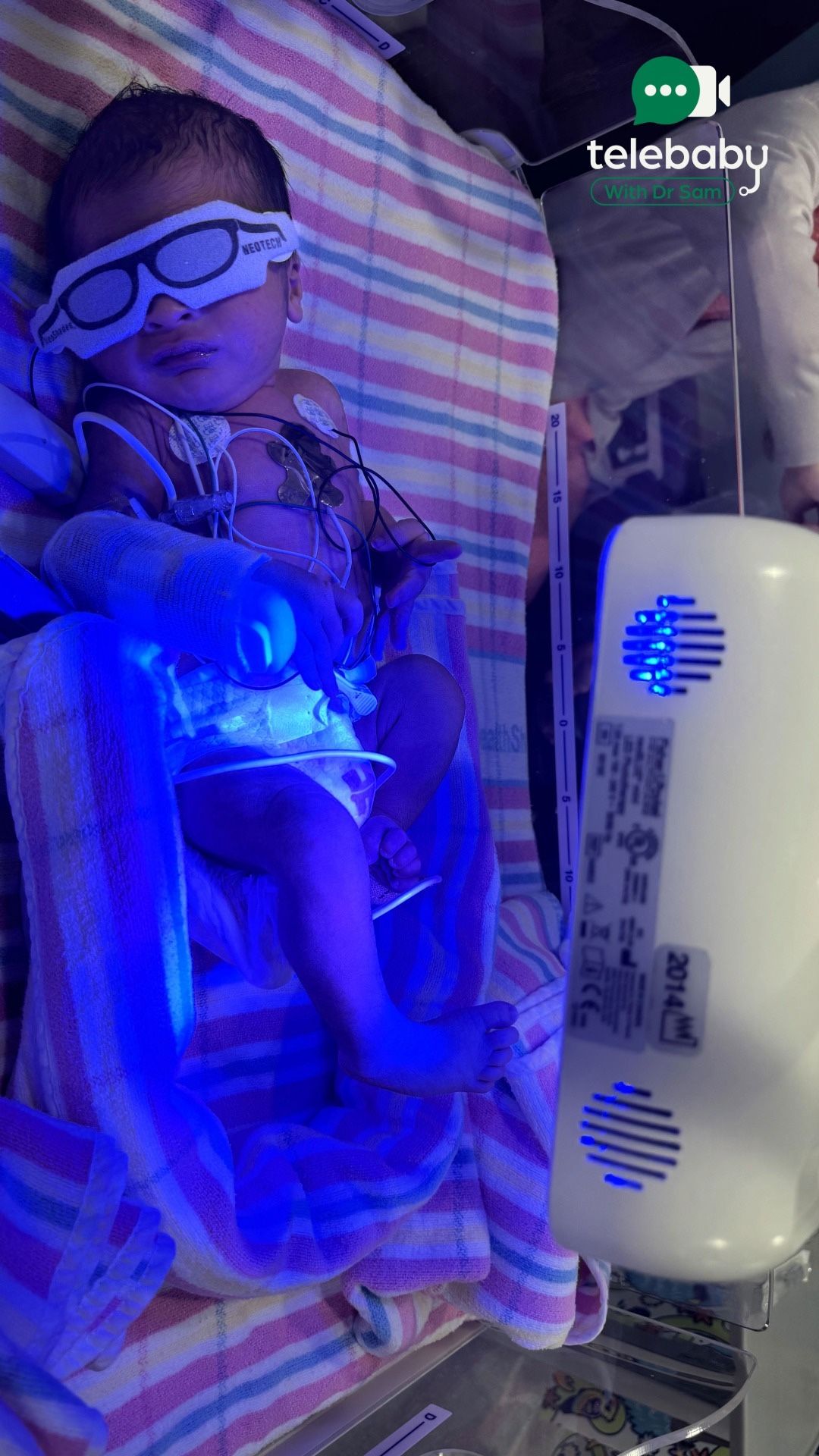
Phototherapy uses special blue light to convert bilirubin into a form the body can remove more easily.
Phototherapy may be provided using overhead blue lights or a special light blanket known as a BiliBlanket.
During phototherapy:
• Babies usually wear only a nappy
• Eye protection is used with overhead lights
• Feeding, hydration and bilirubin levels are monitored closely
In some situations, selected babies may be treated at home using a BiliBlanket under medical supervision.
Phototherapy is very safe and highly effective.
Some babies may develop loose stools or a mild skin rash during phototherapy, but these effects are temporary.
Sunlight can help break down bilirubin, but it is no longer recommended as a treatment for newborn jaundice because of the risks of sunburn, overheating and dehydration. Phototherapy provides a safe and controlled form of light treatment without these risks.
Intravenous Immunoglobulin (IVIg)
Some babies with severe jaundice caused by blood group incompatibility may require intravenous immunoglobulin (IVIg).
IVIg helps reduce the breakdown of red blood cells and may help lower bilirubin levels in some babies.
Exchange Transfusion
In severe cases, babies may require an exchange transfusion.
This rare treatment involves replacing the baby’s blood gradually with donor blood to rapidly reduce bilirubin levels.
Treating the Underlying Cause
Some babies may require additional treatment for:
• Blood group incompatibility
• Infection
• Dehydration
• Liver disease
Does Jaundice Make Babies Sleepy?
Yes. Babies with higher bilirubin levels may become sleepier and feed less effectively.
Unfortunately, poor feeding can then worsen jaundice because bilirubin is removed through stool and urine.
Parents should seek medical review if their baby is:
• Too sleepy to feed
• Missing feeds
• Producing fewer wet nappies
• Having poor weight gain
How Long Does Jaundice Last?
For most healthy full-term babies:
• Jaundice starts around days 2-3
• Peaks around days 3-5
• Improves over 1-2 weeks
Breast milk jaundice may persist for several weeks in otherwise healthy babies.
In premature babies, jaundice may last longer.
Jaundice lasting longer than 2 weeks should be reviewed by a doctor.
Final Thoughts
Jaundice in newborn babies is extremely common and, in most cases, harmless and temporary. However, some babies develop bilirubin levels that require monitoring or treatment.
Early assessment is important, especially in babies who are:
• Premature
• Feeding poorly
• Very sleepy
• Becoming increasingly yellow
Modern treatments such as phototherapy are very effective and help prevent complications.
If you are worried about your baby’s jaundice, feeding, weight gain or behaviour, medical review can help determine whether monitoring, bilirubin testing or treatment is needed.
Frequently Asked Questions About Jaundice in Babies
Is jaundice common in newborn babies?
Yes. Jaundice is one of the most common newborn conditions and affects most babies to some degree during the first week of life.
Can breastfeeding cause jaundice?
Breastfeeding itself does not cause harmful jaundice, but feeding difficulties during the early days can contribute to higher bilirubin levels if babies are not getting enough milk.
Breastfeeding jaundice usually improves as your baby gets more milk and feeding becomes established.
Support from a child and family health nurse or lactation consultant can help improve breastfeeding and ensure your baby is feeding effectively.
Some healthy breastfed babies may also develop breast milk jaundice, a usually harmless and temporary type of mild jaundice caused by substances in breast milk that increase the reabsorption of bilirubin from the intestines into the bloodstream. It can persist for several weeks in otherwise well babies who are feeding and growing normally. Continued breastfeeding is recommended, as babies usually continue to feed, grow and develop normally.
What is the difference between breastfeeding jaundice and breast milk jaundice?
Breastfeeding jaundice usually occurs during the first few days of life when a baby is not getting enough milk intake while feeding is still being established. It is often related to dehydration or reduced bowel motions, which can slow the removal of bilirubin from the body.
Breast milk jaundice usually appears after the first week of life in otherwise healthy babies who are feeding and growing well. It is thought to be caused by substances in breast milk that increase the reabsorption of bilirubin from the intestines back into the bloodstream.
Both conditions are usually temporary, and continued breastfeeding is generally recommended.
Can formula help jaundice?
Babies who feed well, whether breastfed or formula fed, clear bilirubin more effectively. However, breastfeeding can usually continue safely with appropriate support.
Can jaundice cause brain damage?
Very severe untreated jaundice can affect the brain and cause a rare condition known as bilirubin encephalopathy or kernicterus.
This occurs when very high bilirubin levels cross into the brain and can lead to serious neurological complications.
Fortunately, this is very uncommon in Australia because babies are monitored carefully and treated early when needed.
Is phototherapy safe?
Yes. Phototherapy is a very safe and commonly used treatment for newborn jaundice.
Can sunlight treat jaundice?
Sunlight is not recommended as a treatment for newborn jaundice because it can increase the risk of sunburn, overheating and dehydration. Phototherapy provides a safer and more controlled treatment option.
Can jaundice return after phototherapy?
Bilirubin levels can sometimes rise slightly again after phototherapy is stopped. Some babies require repeat bilirubin testing to ensure levels remain safe.
Can my baby be treated at home with phototherapy?
Some babies with jaundice may be suitable for home phototherapy using a special light blanket called a BiliBlanket.
Home treatment is only appropriate for selected babies who are otherwise well and have bilirubin levels that can be safely monitored outside hospital.
Babies receiving home phototherapy still require close medical follow-up and repeat bilirubin testing.
What colour stools are concerning in a jaundiced baby?
Pale, white or clay-coloured stools can suggest liver or bile duct problems and require urgent medical review.
Can premature babies get worse jaundice?
Yes. Premature babies are more likely to develop significant jaundice because their liver is less mature.
When should I worry about jaundice?
You should seek urgent medical review if your baby:
• Is unwell or has a fever
• Is feeding poorly
• Is not gaining enough weight
• Has fewer wet nappies
• Is difficult to wake
• Looks increasingly yellow
• Has jaundice in the first 24 hours
• Has pale stools or dark urine
• Has a high-pitched cry
• Appears floppy or unusually stiff
• Still has jaundice after 2 weeks
Can jaundice be assessed by telehealth?
Telehealth can help assess feeding, hydration, sleepiness, weight trends and whether urgent in-person review is needed. However, babies with significant jaundice often require physical examination and bilirubin testing in person. If needed, referrals for bilirubin blood tests and further investigations can be arranged during a telehealth consultation.
Written by Dr Samuel Heitner