

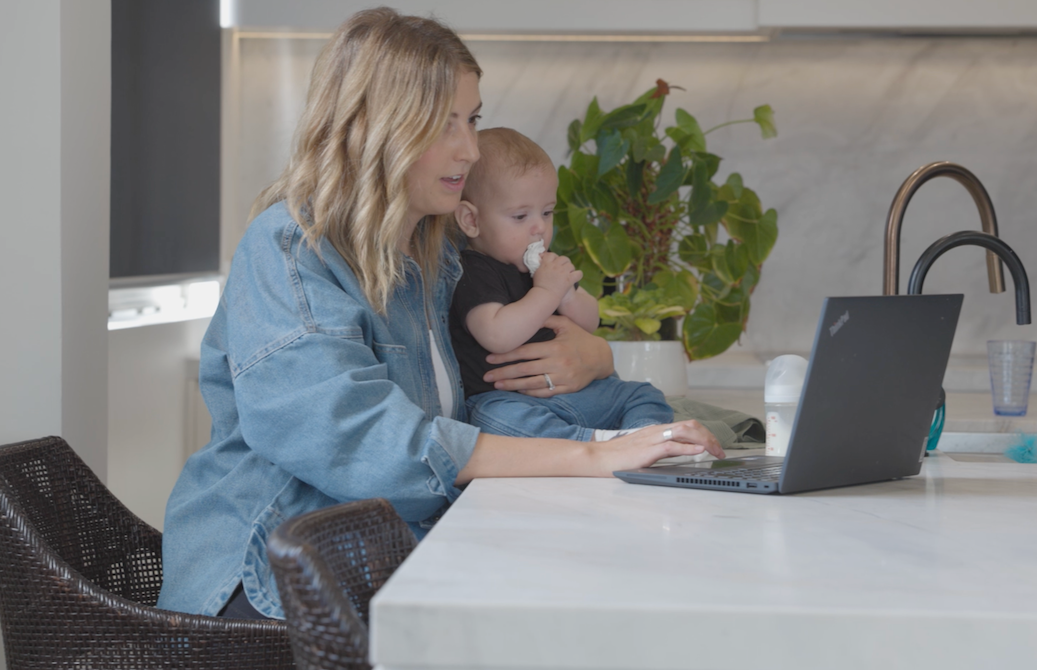
Many parents in Australia are now considering telehealth, often referred to as virtual care, when their baby or child needs to see a paediatrician.
In Australia, paediatric telehealth allows families to access specialist care more quickly and conveniently, particularly for common concerns in babies and children.
A common question is whether an online consultation is enough, or if their child needs to be seen in person.
The reality is that many common childhood concerns can be safely assessed and managed via telehealth, while some situations still require your child to be seen in person.
Understanding when telehealth is appropriate can help you make the right decision for your child.
If you are unsure, speaking with a paediatrician online can be a convenient first step.
👉 You can book an online paediatric consultation with Telebaby, available Australia-wide.
What Is a Paediatric Telehealth Consultation?
Paediatric telehealth is the use of technology to provide healthcare to babies and children remotely. It allows families to speak with a paediatrician online via video or phone, instead of, or alongside, being seen in person.
It allows paediatricians, specialists, and allied health professionals to provide:
• Clinical advice
• Assessment and diagnosis
• Treatment plans
• Preventative care and guidance
• Ongoing monitoring
Consultations are typically conducted via video or phone, depending on the situation.
In practice, most paediatric telehealth consultations are done via video, as this allows the paediatrician to:
• Observe your baby or child
• Assess breathing, behaviour, and interaction
• Examine visible concerns such as rashes or eczema
Phone consultations can still be useful for follow-up, reviewing results, or general advice.
However, for most new concerns, particularly in babies and young children, a video consultation provides a more accurate and safer assessment.
At Telebaby, consultations are conducted via video to allow a thorough and high-quality assessment.
This approach allows many common concerns to be assessed safely and effectively from home.
What Happens During a Telehealth Consultation?
A typical telehealth consultation is structured and thorough, allowing time to understand your concerns and develop a clear plan.
It usually includes:
1. A detailed discussion of your concerns
2. Review of your child’s medical history
3. Video assessment where relevant
4. Assessment and diagnosis, or a working diagnosis
5. A clear and personalised management plan
6. Prescriptions, referrals, or investigations if needed
7. Follow-up advice and safety-netting
At Telebaby, consultations with Dr Sam follow this structured approach. Families receive a clear written plan after the consultation, along with ongoing email support for one week and a follow-up phone call to ensure your child is improving.
This approach ensures parents leave the consultation with clear answers and confidence about what to do next.
What Problems Can Be Managed via Telehealth?
Many paediatric conditions are diagnosed primarily through history and observation, making them well suited to telehealth.
Many of these concerns can be safely assessed through a telehealth consultation, particularly when guided by an experienced paediatrician, allowing families to speak with a paediatrician online from home.
A key factor is the experience of the paediatrician. An experienced paediatrician knows which questions to ask, how to interpret symptoms, and how to guide parents during the consultation. Parents can also be guided to perform simple examination techniques at home, such as looking in the mouth, assessing breathing, or showing specific areas on camera.
Clinical experience also allows many conditions to be recognised based on patterns in the history and observation during the consultation.
For example, a child who is drooling and has reduced oral intake may have tonsillitis or mouth ulcers, whereas a child who is happily drinking without apparent pain is less likely to have these conditions based on the history and observation during the consultation. Similarly, the sound and pattern of a cough can provide important clinical clues.
Skin Conditions in Babies and Children
Skin conditions are one of the easiest concerns to assess via telehealth or an online consultation. Parents can show the rash clearly on video, describe how it has changed over time, and discuss what treatments have already been tried.
Common conditions include:
• Eczema
• Nappy rash
• Newborn rashes
• Viral and bacterial rashes
• Impetigo
• Mild cellulitis
• Infantile haemangiomas
In many cases, an assessment and diagnosis can be made based on visual appearance and history alone.
Management plans typically include clear skincare routines and, where appropriate, prescription treatments such as topical steroid creams or antibiotics.
Eczema is one of the most common reasons parents seek advice. You can read more about
eczema in babies and children and how to treat it.
Nappy rash is also frequently managed via telehealth. Learn more about nappy rash in babies and how to manage it.
For younger infants, it can be helpful to understand common newborn rashes and what is normal.
Infantile haemangiomas can also be assessed remotely, with guidance on monitoring and when treatment is needed. Read more about infantile haemangiomas in babies, causes and treatment.
Feeding, Reflux and Digestive Issues
Feeding and digestive concerns are among the most common reasons parents seek a paediatric telehealth consultation.
Conditions include:
• Infant reflux
• Cow’s milk protein allergy (CMPA)
• Lactose intolerance
• Constipation
These are usually diagnosed based on a detailed history, feeding patterns, and symptoms rather than physical examination.
Infant reflux is particularly common in early life. You can read more about
infant reflux in babies and how to manage it.
If a milk allergy is suspected, a paediatrician can guide diagnosis and management, including prescribing specialised formulas where needed. This may include extensively hydrolysed formulas or amino acid formulas.
You can read more about
cow’s milk protein allergy in babies and how it is diagnosed and treated, as well as understanding the difference between lactose intolerance vs milk allergy in babies.
Constipation is also frequently discussed during consultations. You can read more about
baby constipation causes and treatment.
Unsettled Babies and Crying
Many telehealth consultations involve unsettled or crying babies, particularly in the first few months of life.
A paediatrician can assess feeding patterns, crying behaviour, and sleep patterns in detail. In many cases, a thorough history provides more useful information than a physical examination.
Common causes include feeding difficulties, reflux, cow’s milk protein allergy (CMPA) or intolerance, and normal developmental patterns such as colic or purple crying.
Telehealth is well suited to these concerns, as it allows time to explore patterns, triggers, and what has already been tried, while guiding parents on practical strategies.
You can read more about coping with colic and purple crying and practical tips for parents.
If there are any concerns during the consultation, further investigations can be arranged or a face-to-face review recommended.
Common Childhood Illnesses, Feeding and Development Concerns
Telehealth can be used to assess, guide management, and provide reassurance for a wide range of common childhood illnesses and developmental concerns.
It is particularly useful for conditions where diagnosis relies on a detailed history and careful observation.
Respiratory and Infections
• Asthma or wheezing
• Cough, croup, or breathing difficulties
• Bronchiolitis
• Fever
• Sore throat
• Ear infections or ear pain
• Eye infections or irritation
Respiratory illnesses are one of the most common reasons parents seek advice. You can read more about bronchiolitis in children and when to worry.
Allergy-Related Conditions
• Food allergies
• Environmental or seasonal allergies
• Suspected cow’s milk protein allergy (CMPA) or intolerance
Telehealth is well suited to allergy-related concerns, where diagnosis is often guided by history and symptom patterns.
You can read more about cow’s milk protein allergy in babies and how it is diagnosed and treated, as well as lactose intolerance vs milk allergy in babies.
Growth, Feeding and Development
• Feeding or breastfeeding support
• Formula selection or transition advice
• Growth or weight concerns
• Sleep and settling issues
These concerns often benefit from a detailed discussion and ongoing support. For example, feeding difficulties may be linked to reflux or intolerance.
You can read more about infant reflux in babies and how to manage it.
Other Common Concerns and Follow-Up Care
• Urinary tract infections or recurrent UTI
• Minor head injury or concussion
• Acute or recurrent balanitis
• Jaundice
• Abnormal movements or tremors
• Tracheomalacia or noisy breathing
• Abnormal head shape (plagiocephaly)
• Hip dysplasia or hip ultrasound advice
• Iron deficiency anaemia
• Second opinions about your child’s health
• Repeat prescriptions for ongoing conditions such as ADHD, where appropriate
Telehealth is also useful for reviewing results, arranging investigations, and providing follow-up care.
Hip dysplasia, for example, is typically diagnosed using imaging such as ultrasound or X-ray, which can be arranged during a telehealth consultation when needed. You can read more about hip dysplasia in babies and early signs to look for.
Benefits of Paediatric Telehealth in Australia
Faster access
Telehealth can significantly reduce wait times to see a paediatrician.
Convenience
There is no need for travel, parking, or waiting rooms, which is especially helpful with newborns or multiple children.
Less disruption to your day
Appointments can fit more easily around work, school, and family routines, reducing the need to take time off or organise childcare.
Access for rural and remote communities
Telehealth improves access to paediatric care for families living in rural and remote areas of Australia, where access to specialists can be limited or involve long travel distances.
Reduced exposure to infections
Telehealth reduces the risk of exposure to infections encountered in waiting rooms or clinics, which is particularly important for newborns, young babies, and children with underlying medical conditions.
Comfort for your child
Children are often more relaxed at home, which can make assessment more accurate.
Assessment in your child’s usual environment
Being at home can provide additional context, allowing the paediatrician to observe feeding, behaviour, or sleep in a more natural setting.
More time for discussion
Consultations are typically structured and allow time for detailed explanation and planning.
Easier follow-up care
Follow-up consultations can be arranged more easily, allowing ongoing review and adjustment of your child’s management plan when needed.
Ongoing support
At Telebaby, families receive ongoing email support for one week after the consultation, allowing parents to ask follow-up questions and send updates or photos where needed.
Medicare rebates
In Australia, telehealth consultations with a paediatrician may be eligible for a Medicare rebate if you have a valid GP referral, helping to reduce out-of-pocket costs for families.
These benefits make telehealth a convenient and effective first step for many common concerns in babies and children.
Limitations of Telehealth
Telehealth is not suitable for every situation.
Limitations include:
• A full physical examination is not possible
• Some conditions require hands-on assessment
• Certain situations still require your child to be seen in person
• Assessment may be limited by video quality or visibility
• Vital signs may not be measured directly, but can be assessed indirectly or arranged if needed
• Technical issues may occasionally affect the consultation
Despite these limitations, investigations such as blood tests and imaging, including X-rays or ultrasounds, can be arranged during a telehealth consultation. Results can then be reviewed and followed up remotely where appropriate.
A safe telehealth consultation always includes clear advice about when your child should be seen in person, ensuring your child receives appropriate and timely treatment.
GP Telehealth vs Paediatric Telehealth in Australia
In Australia, many GPs offer telehealth consultations for children. GP telehealth can be useful for initial assessment, prescriptions, and general medical care.
A paediatrician may be more appropriate for more complex or ongoing concerns, particularly those involving feeding issues, growth, development, or more specialised paediatric conditions.
In many cases, telehealth with a GP can be a helpful first step, with referral to a paediatrician when more specialised input is needed.
When Should You See a Doctor in Person Instead of Telehealth?
Seek urgent medical care and have your child seen in person if they have:
· Difficulty breathing
· Lethargy or reduced responsiveness
· Signs of dehydration
· Severe pain
· High fever in a young infant
· Rapidly worsening symptoms
· Seizures or abnormal movements
· Blue lips or face
· A rash that does not fade when pressed (non-blanching rash)
In these situations, it is important to seek immediate medical attention. In Australia, this may involve seeing your GP urgently, attending an emergency department, or calling emergency services.
If you are unsure, a telehealth consultation can still be a helpful first step, but urgent symptoms should always be assessed face-to-face.
Can a Paediatrician Diagnose a Child Online?
Yes, in many cases, a paediatrician can diagnose a child online.
Many paediatric conditions are diagnosed based on:
• History
• Feeding patterns
• Behaviour
• Visual assessment
Telehealth is safe when conducted by an experienced paediatrician who can gather important clinical information through careful observation and guided assessment during the consultation.
In many cases, an assessment and diagnosis, or a working diagnosis, can be made, with a clear management plan and follow-up to ensure your child is improving.
Final Thoughts
Telehealth has become an important part of paediatric care in Australia.
Many common concerns, including skin conditions, feeding issues, unsettled babies, respiratory illnesses, and minor infections, can be safely assessed and managed from home.
At the same time, recognising when in-person care is needed remains essential.
If you are unsure, a telehealth consultation can be a helpful first step, providing reassurance, guidance, and a clear plan for next steps.
Speaking with a paediatrician early can often provide clarity and peace of mind.
Frequently Asked Questions
Is telehealth safe for babies and children?
Yes, telehealth is safe for babies and children when conducted by an experienced paediatrician. A large amount of clinical information can be gathered through careful history and observation via video.
An experienced paediatrician can assess behaviour, breathing, feeding, and overall wellbeing, and guide parents during the consultation to help with the assessment.
Clear advice is always provided about when your child needs to be examined in person, helping ensure safe and appropriate care.
Can a paediatrician prescribe medication in Australia via telehealth?
Yes, prescriptions can be provided electronically when clinically appropriate, including medications such as antibiotics, steroid creams, ADHD medications, and specialised formulas for babies with suspected milk allergy.
Can you organise tests through telehealth?
Yes, blood tests, imaging such as X-rays or ultrasounds, and more specialised tests like EEG can be arranged and reviewed remotely.
Is there a Medicare rebate for paediatric telehealth consultations?
If you have a valid GP referral, you may be eligible for a Medicare rebate for a paediatric telehealth consultation. This can help reduce out-of-pocket costs for families.
Do I still need to see a GP?
Sometimes, especially if a physical examination is required. With Telebaby, your GP will receive a letter summarising the consultation and management plan, helping ensure continuity of care.
Can telehealth be used for urgent issues?
Telehealth can help with initial assessment, but urgent symptoms usually require your child to be seen in person immediately.
What age can use telehealth?
Telehealth is suitable for children of all ages, from newborns through to adolescents.
How quickly can I get an appointment?
Telehealth appointments are often available sooner than in-person consultations, allowing faster access to a paediatrician when you need advice.
Do I need a referral for a paediatric telehealth consultation?
In most cases, a GP referral is required to access Medicare rebates. However, you can still book a consultation without a referral if you are happy to pay privately.
Book a Paediatric Telehealth Consultation
If you’re concerned about your baby or child, a telehealth or online consultation can be a convenient and effective first step.
Speak directly with Dr Sam from the comfort of your home and get clear answers and a personalised plan for your child.
Consultations are conducted via video and include a comprehensive assessment, a clear management plan, ongoing email support for one week, and a follow-up phone call to review progress.
Written by Dr Samuel Heitner